



Agentic Dynamics 365: Why Everyone Is Talking About It
Introduction
There is a lot of noise around Agentic AI right now. Every headline seems to promise a future where intelligent systems run our business while we watch from the sidelines. This can feel unsettling and exciting at the same time. I hear this often when I speak with leaders who want to understand what agentic AI truly means for their day-to-day operations. If you feel the same way, I want to make this shift easier to navigate.
In this blog, I break down what Agentic Dynamics 365 really is, why organizations are adopting it, and how you can embrace it without feeling overwhelmed. I also share some of the lessons I have observed during my conversations and experiences to leverage and combine AI with human expertise to help uncover and act on customer intent in real time, turn conversations into knowledge, guide sales team to success, to name a few.
What Agentic Dynamics 365 Really Means
Agentic Dynamics 365 Business Apps use autonomous AI agents to work alongside people. These agents automate tasks, manage workflows, and make recommendations based on real patterns. They analyze wide sets of data, respond in real time, and support employees with decisions that once required ling manual effort.
I see these agents as teammates. They do not wait for constant instructions. They learn, act, and improve with every interaction. This frees people to focus on work that needs human judgment, empathy, and creativity.
My personal observation is that this transition is often accompanied by a layer of healthy skepticism, especially in the early stages of adoption. When teams begin exploring agentic capabilities, they approach them with interest, but not without care.
- Behavior: Users are curious but cautious. They test the agent with simple, low-risk tasks. There’s a natural tendency to double-check outputs for accuracy particularly in the beginning. Over time, it becomes evident that frequent usage improves accuracy and builds confidence in the agent’s ability to learn and respond effectively.
- Emotions: The emotional response mirrors this behavior. Teams experience mixed feelings, excitement about the possibilities, alongside uncertainty around reliability. This often translates into additional time spent cross-checking results and validating recommendations as users learn where and how agents deliver the most value.
What stands out is how quickly this balance shifts with consistent interaction. As agents demonstrate reliability through repeated use, skepticism gives way to trust, and teams begin to engage with them less as experimental tools and more as dependable teammates embedded in everyday work.
Why Agentic AI Matters Today
Scaling sales and service used to mean expanding teams. Today, many businesses are managing tighter budgets and higher expectations. Workloads grow faster than headcount, and customers expect quick, accurate service across every channel.
Agentic AI in business helps address this gap. It handles repetitive tasks, guides actions, and empowers teams with focus on high-value work. I often describe it as a way to do more of the right work, not more work in general.
This shift is not about replacing people. It is about giving people tools that reduce friction and improve the pace of outcomes. When I see teams use agentic support for the first time, the reaction is often relief rather than fear. They understand how much time they can reclaim.
The Human-AI Partnership
I believe the most meaningful impact of agentic AI is how it strengthens the collaboration between humans and technology. When AI takes on structured, time-bound actions, people can engage customers with empathy and think more strategically.
This partnership also improves consistency. Every action is backed by data and reinforced by learning. As a result, experiences become more reliable and interactions feel more thoughtful.
What Impact Looks Like
Organizations are already using agentic capabilities in Dynamics 365 across sales, service, and marketing. I have seen these patterns show up most clearly in three areas:
- Sales Transformation: Agents help teams qualify leads, identify opportunities, and manage large volumes of customer interactions. This reduces manual work and increases the number of conversations that move forward.
- Service Excellence: Agents support onboarding, transaction search, and knowledge discovery. This reduces time spent navigating systems and leads to faster resolutions and better experiences.
- Measurable Results: Companies’ track results in conversion rates, first-contact resolution, and percentage of increase in campaign performance. These metrics show how agentic AI enhances accuracy and speed.
These changes help teams move with confidence. Even small shifts create visible improvements.
How Dynamics 365 Business Apps Makes This Possible
Dynamics 365 includes prebuilt and customizable agents for sales, service, and marketing. These agents learn from every customer interaction. They identify patterns, highlight gaps, and recommend actions that teams can trust.
You can deploy these agents individually or arrange them together for powerful workflows. This makes automation flexible and practical. Business and IT leaders can configure them to match their specific processes and handoff criteria.
Fig:1 – Sales Persona’s Customer Journey
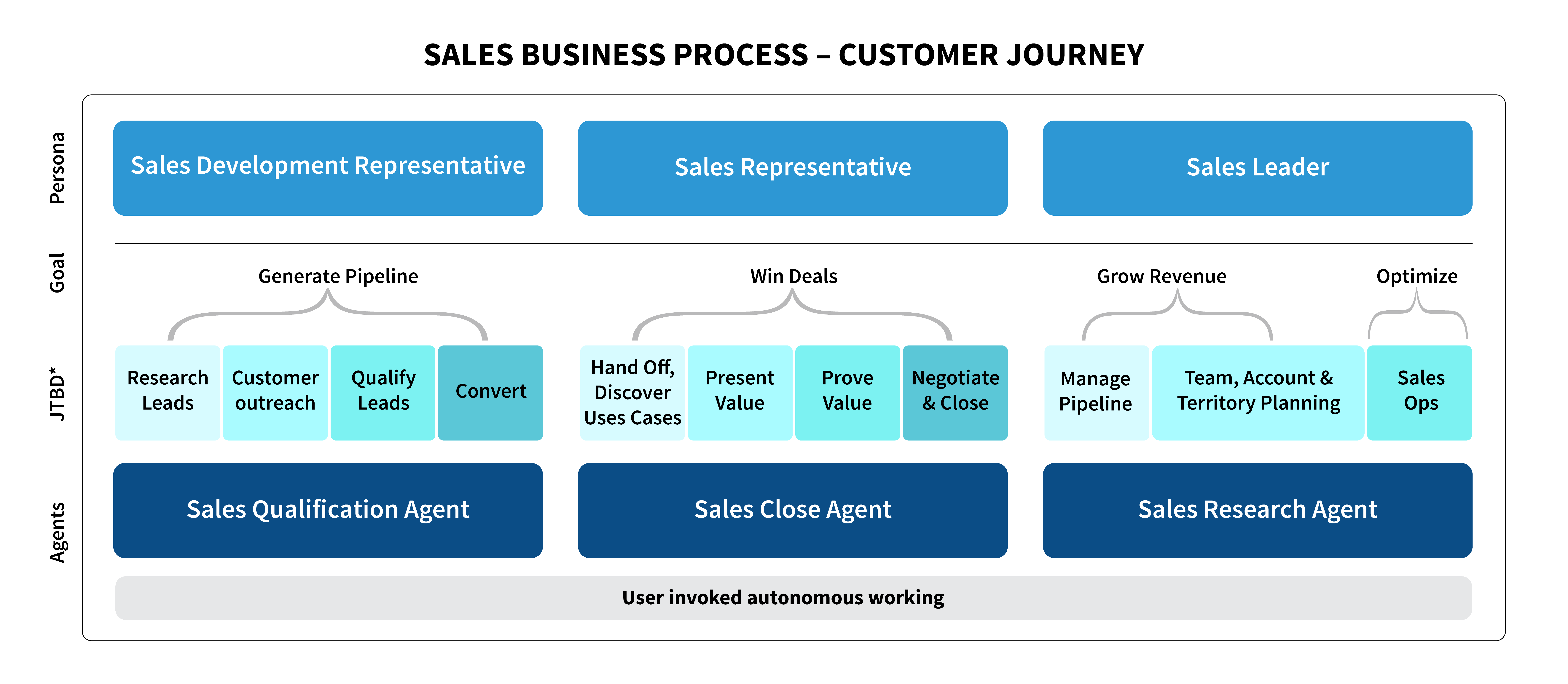
In both (1) and (2), the agents as listed are first-party apps from Microsoft.
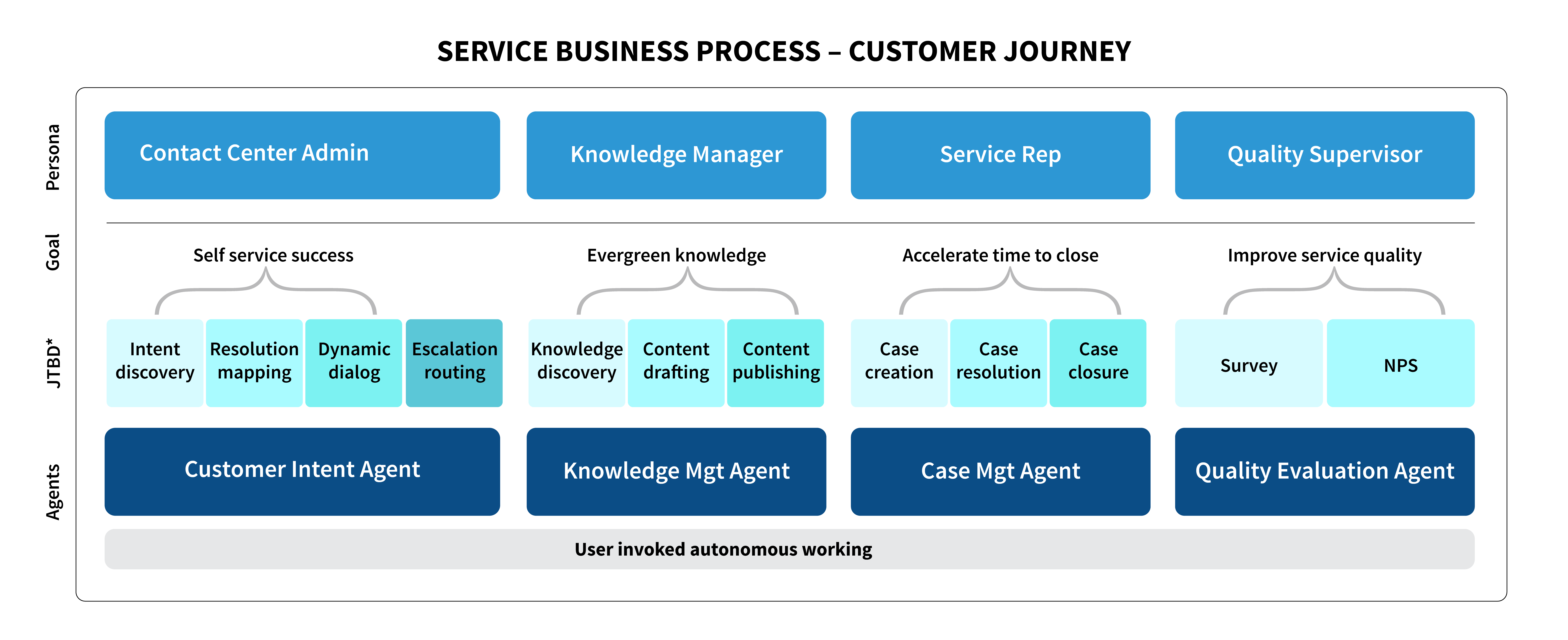
Fig: 2 – Customer Service Persona’s Customer Journey
Agentic AI in Business: Key Patterns That Lead the Way
From what I have observed, successful organizations follow three clear patterns:
- Copilot Assistance: Employees use AI for guidance, summaries, and quick support. This improves productivity and reduces routine effort.
- Task Automation: Specific tasks run on their own, which helps teams scale without adding complexity.
- End-to-End Automation: Workflows operate autonomously. People step in only when they need to confirm key decisions or handle exceptions.
These patterns show that agentic AI is not a leap. It is a sequence of steps that build on each other.
How to Get Started Without Feeling Overwhelmed
If this still feels like a lot, start with one simple move. Choose a small, low-risk process and pilot an agent. Measure what changes. Then expand gradually.
Here are steps that help organizations begin well:
- Improve data quality to support accurate insights
- Build cross-functional alignment early
- Let teams experiment and learn with guidance
- Identify processes that slow you down today
I encourage leaders to think long term. Agentic AI is more than about simply automating tasks. It’s about reshaping how workflows through the organization.
Best Practices for Successful Agent Onboarding
- Start with Clear Objectives
Define what problems the agent will solve and how success will be measured. Avoid vague goals—focus on specific use cases like automating repetitive tasks, improving customer service, or enhancing decision-making. - Begin Small, Scale Gradually
Start with a pilot program involving a limited set of users and tasks. This minimizes risk and allows for controlled learning before enterprise-wide rollout. - Invest in User Education
Provide training on how to interact effectively with agents (e.g., prompt design, understanding limitations). Early confidence-building is critical for adoption. - Set Realistic Expectations
Communicate that agents are assistive, not infallible. Encourage users to validate output initially and provide feedback for continuous improvement. - Establish Governance & Security
Implement policies for data privacy, compliance, and ethical use. Ensure transparency in how agents process and store information. - Create Feedback Loops
Collect user feedback regularly to refine agent behavior and improve relevance. Use analytics to monitor adoption and performance. - Foster a Culture of Trust
Highlight success stories and demonstrate tangible benefits. Trust grows when users see consistent accuracy and value in their workflows. - Plan for Continuous Evolution
Agents improve over time. Design a roadmap for feature enhancements, integration with enterprise systems, and personalization.
Conclusion
Agentic Dynamics 365 Business Apps signals a shift in how work itself is imagined. The real value is not only in automating tasks or improving workflows. It is in creating a system where people, data, and intelligent agents operate with shared clarity and purpose. This is the change I see organizations responding to most, moving from fragmented processes to connected, learning-driven ecosystems that guide better decisions in real time.
The key takeaway is simple. Agentic AI becomes transformative only when businesses pair its capabilities with intentional design: strong data foundations, clear governance, and teams ready to collaborate with intelligent systems. When these elements come together, measurable impact follows. Improved conversions, faster resolutions, and more consistent customer engagement become outcomes of a more thoughtful way of working.
Agentic Dynamics 365 gives businesses the opportunity to redesign work with intelligence at the center. Those who act early and with intent will lead the emergence of truly modern, connected, and insight-driven operations.
Drive agentic CX with what’s new in Dynamics 365 for sales & service:
https://ignite.microsoft.com/en-US/sessions/8da85af2-6ce9-440f-8cc7-fa83dad6920c
Blogger's Profile

Hemantkumar Savla
Director - Program & Project Management, Enterprise Cloud Apps
Hemantkumar Savla brings over 25 years of experience across Sales, Customer Service, and Field Service, uniting domain consulting and IT leadership. He helps global organizations adopt Operate-to-Thrive (O2T) solutions powered by Microsoft Copilot and Generative AI. With expertise in manufacturing, insurance, healthcare, and retail, and deep knowledge of Dynamics 365, Power Platform, and Azure, he focuses on driving innovation through intelligent automation and AI-driven strategies.
More from Hemantkumar Savla
In the first quarter of the 2020s, digital transformation itself was transformed. Businesses…
Working from home and collaborating remotely are not new ways of working, at least for the…
Customer Experience is overtaking Price and Product as the key brand differentiator. Customer…
Microsoft Dynamics 365 is a truly modern business platform, which helps drive digital transformation…
Latest Blogs
Traditionally operations used to be about keeping the lights on. Today, it is about enabling…
Generative AI (Gen AI) is driving a monumental transformation in the automotive manufacturing…
Organizations are seeking ways to modernize data pipelines for better scalability, compliance,…
In the era of Industry 4.0, automation, robotics, and data-driven decision-making are dominating…
